Comprehensive Research Guide to the KPV Peptide: The Future of Anti-Inflammatory and Gut Repair Science
When exploring the absolute cutting edge of immunological research, dermatological health, and advanced gastrointestinal recovery, few biochemical compounds offer the profound, systemic importance of the KPV Peptide. Comprising a simple yet remarkably potent three-amino-acid sequence (Lysine-Proline-Valine), this specific molecule is a derivative of the naturally occurring alpha-Melanocyte-stimulating hormone ($\alpha$-MSH). However, unlike its parent hormone, the KPV Peptide does not influence skin pigmentation, making it a pure, non-tanning signaling molecule focused entirely on cooling systemic inflammation and repairing the body’s delicate internal and external barriers.
This comprehensive guide delves deeply into the biochemical science, structural mechanisms, and rigorous laboratory applications of the KPV Peptide, providing scientific professionals, longevity researchers, and dedicated biohackers with the critical data required to fully understand its vast physical potential. Whether your focus is investigating the treatment of Inflammatory Bowel Disease (IBD), studying the profound impact of NF-$\kappa$B inhibition on chronic skin conditions, or exploring novel pathways for antimicrobial defense, this specific high-purity formulation offers a highly reliable, heavily documented profile for rigorous scientific observation.
The Science of Inflammation: Why the KPV Peptide is a Biological Breakthrough
To fully grasp the massive efficacy of this critical tripeptide, it is essential to trace the biological role of the melanocortin system. For decades, researchers have utilized $\alpha$-MSH to study immune modulation, but the parent hormone’s tendency to cause skin darkening (pigmentation) made it impractical for many therapeutic research models. The massive breakthrough came with the discovery that the C-terminal fragment—the KPV Peptide—retains the most potent anti-inflammatory properties of the larger hormone without any of the pigmentary side effects.
Inflammation is the body’s natural response to injury or infection, but when it becomes chronic, it begins to destroy healthy tissue, particularly in the gut and the skin. Chronic inflammation is driven by a massive overactivation of the NF-$\kappa$B signaling pathway. This pathway acts as a “master switch” that tells the body to produce a flood of inflammatory cytokines. The KPV Peptide acts as a biological “off switch” for this pathway. By artificially reintroducing this massive, high-purity signaling molecule into a biological system, scientists aim to literally halt the inflammatory fire, allowing the body to redirect its energy toward cellular repair and barrier restoration.
Structural Science: The Simplicity of the KPV Peptide
At its core, the KPV Peptide is an elegant tripeptide sequence: Lysine-Proline-Valine. Its molecular simplicity is actually its greatest scientific advantage. Unlike larger, more complex proteins that the body’s immune system might attack or degrade before they can work, this tiny sequence is exceptionally stable and highly bioavailable.
In terms of functional biology, the KPV Peptide works through both intracellular and extracellular mechanisms. It is one of the few peptides capable of being transported directly into cells via the PepT1 transporter, which is found in high concentrations in the intestinal lining. This unique “direct entry” allow the peptide to interact with the cell nucleus, where it prevents the DNA from transcribing inflammatory genes.
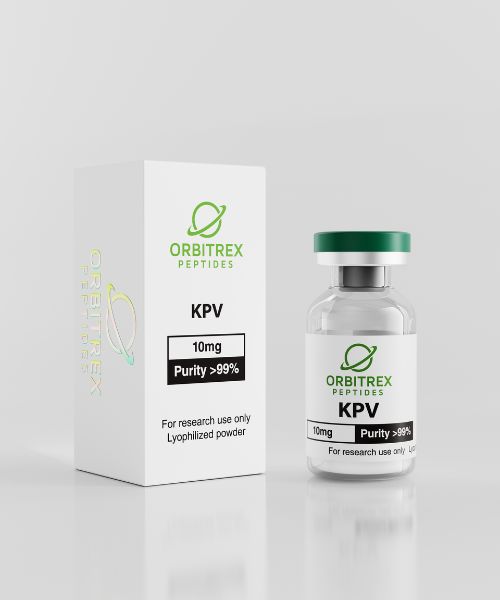
In modern research environments and high-end longevity clinics, the compound is universally supplied as a highly stable, lyophilized (freeze-dried) powder. The specific KPV Peptide dosage format is highly preferred because it provides an incredibly precise, clinically significant yield for targeted studies in gut permeability (leaky gut) and chronic dermatological flare-ups.
Pharmacokinetics: Absorption, Gut Targeting, and Skin Penetration
Understanding the complex pharmacokinetic profile of this vital tripeptide is absolutely vital for properly structuring laboratory experiments, determining accurate dosing intervals, and understanding how it achieves its rapid-acting results.
Oral Bioavailability and the PepT1 Transporter
One of the most remarkable features of the KPV Peptide is its ability to remain biologically active when administered orally. While most peptides are destroyed by stomach acid, the PepT1 transporter in the gut actively “grabs” the KPV sequence and pulls it into the bloodstream and intestinal cells. This makes it an absolute gold standard for researchers studying gut-specific inflammation, as the peptide can reach the site of injury directly through the digestive tract.
Systemic Distribution and Skin Barrier Integration
When administered via subcutaneous injection or topical cream in experimental models, the peptide exhibits incredibly rapid systemic absorption. The unique molecular structure allows the KPV Peptide to migrate through the stratum corneum (the outermost layer of skin), reaching the deep epidermal tissue where inflammation begins. Studies indicate that maximum active concentrations are typically reached within minutes, making it a highly rapid-acting, immensely powerful compound for acute inflammatory flare-ups and massive wound-healing interventions.
The Mechanism of Action: How the KPV Peptide Interacts with the Body
Understanding how this specific, targeted sequence exerts its profound soothing and repairing effects requires a highly detailed dive into cellular signaling. Its mechanism of action is distinctly multifaceted, operating seamlessly across the “Gut-Skin Axis” to force the body into an optimized state of healing.
1. Inactivation of the NF-kB Pathway
The primary, absolutely critical mechanism observed in laboratory models is the suppression of NF-$\kappa$B. By entering the cell and preventing this “master switch” from activating, the KPV Peptide stops the production of pro-inflammatory cytokines like TNF-$\alpha$ and IL-8. This massive reduction in chemical signaling allows inflamed tissues in the colon or on the skin to finally begin the recovery process without being constantly bombarded by the body’s own immune system.
2. Potent Antimicrobial Properties
Beyond simple anti-inflammatory regulation, this sequence has demonstrated a unique ability to act as a natural antimicrobial agent. In research settings, the KPV Peptide has shown the ability to inhibit the growth of common pathogens like Staphylococcus aureus and Candida albicans. This is a massive biological unlock because, unlike traditional antibiotics which can destroy the gut microbiome, KPV works with the immune system to neutralize threats while simultaneously cooling the surrounding inflammation.
3. Repairing the “Leaky Gut” and Skin Barrier
The compound successfully targets the “tight junction” proteins that hold cells together. In the gut, this is essential for reversing intestinal permeability (leaky gut), where toxins leak into the bloodstream. In the skin, the KPV Peptide promotes faster wound closure and collagen organization. This highly nuanced tissue-regulatory effect is exactly why the peptide is aggressively studied for its massive potential to completely eliminate the root causes of eczema, psoriasis, and Ulcerative Colitis.
Primary Research Applications in the Laboratory
The remarkably diverse, absolutely foundational biological activities of this molecule have led to a rapidly expanding array of high-level research applications. The baseline KPV Peptide formulation is particularly useful for exploring the following cutting-edge scientific avenues:
Treating Inflammatory Bowel Disease (IBD) and Crohn’s
In the realm of gastroenterology, this sequence is considered a groundbreaking tool for studying chronic gut inflammation. Studies frequently focus on its capacity to aggressively reduce colonic swelling and restore healthy mucosal lining in animal models. Researchers utilize the KPV Peptide to observe how biochemical interventions can completely neutralize the “autoimmune” attacks on the gut without the exhausting systemic side effects of traditional steroids or immunosuppressants.
Advanced Dermatology and Chronic Skin Conditions
Because of its unique, profound ability to supercharge the skin’s healing centers, it acts as a profoundly powerful anti-aging and dermatological catalyst. Experimental models show that administering the massive sequence significantly reduces visible redness, itching, and swelling associated with psoriasis and dermatitis. Researchers deeply use the KPV Peptide molecule to map how the literal biological barrier of the skin can be actively restored and protected against environmental oxidative stress.
Wound Healing and Surgical Recovery
Physical recovery from surgery or injury is entirely dictated by how efficiently the body can manage the initial inflammatory spike. Studies involving the KPV Peptide have deeply explored its unique ability to rapidly “reboot” the wound-healing cascade. By massively reducing the production of scar-forming cytokines, it is continuously investigated as a critical, highly successful tool for violently accelerating recovery times, radically reducing scar tissue formation, and physically repairing the micro-damage caused by years of chronic inflammation.
The Importance of High-Purity Synthesis in Laboratory Settings
In any rigorous, peer-reviewed scientific study or biohacking protocol, the sheer absolute quality of the primary compound directly dictates the absolute validity of the final results. Utilizing an ultra-high-purity KPV Peptide synthesis is entirely non-negotiable for serious clinical researchers and dedicated longevity optimizers.
Impurities in standard peptide manufacturing can heavily include degraded amino-acid chains or highly toxic chemical byproducts left over from the resin extraction process. If a laboratory or individual inadvertently utilizes a compromised, low-grade batch of the KPV Peptide, these invisible impurities can trigger massive, uncontrolled immune responses or heavily skew quantitative anti-inflammatory data, rendering months of incredibly expensive gut and skin research completely invalid.
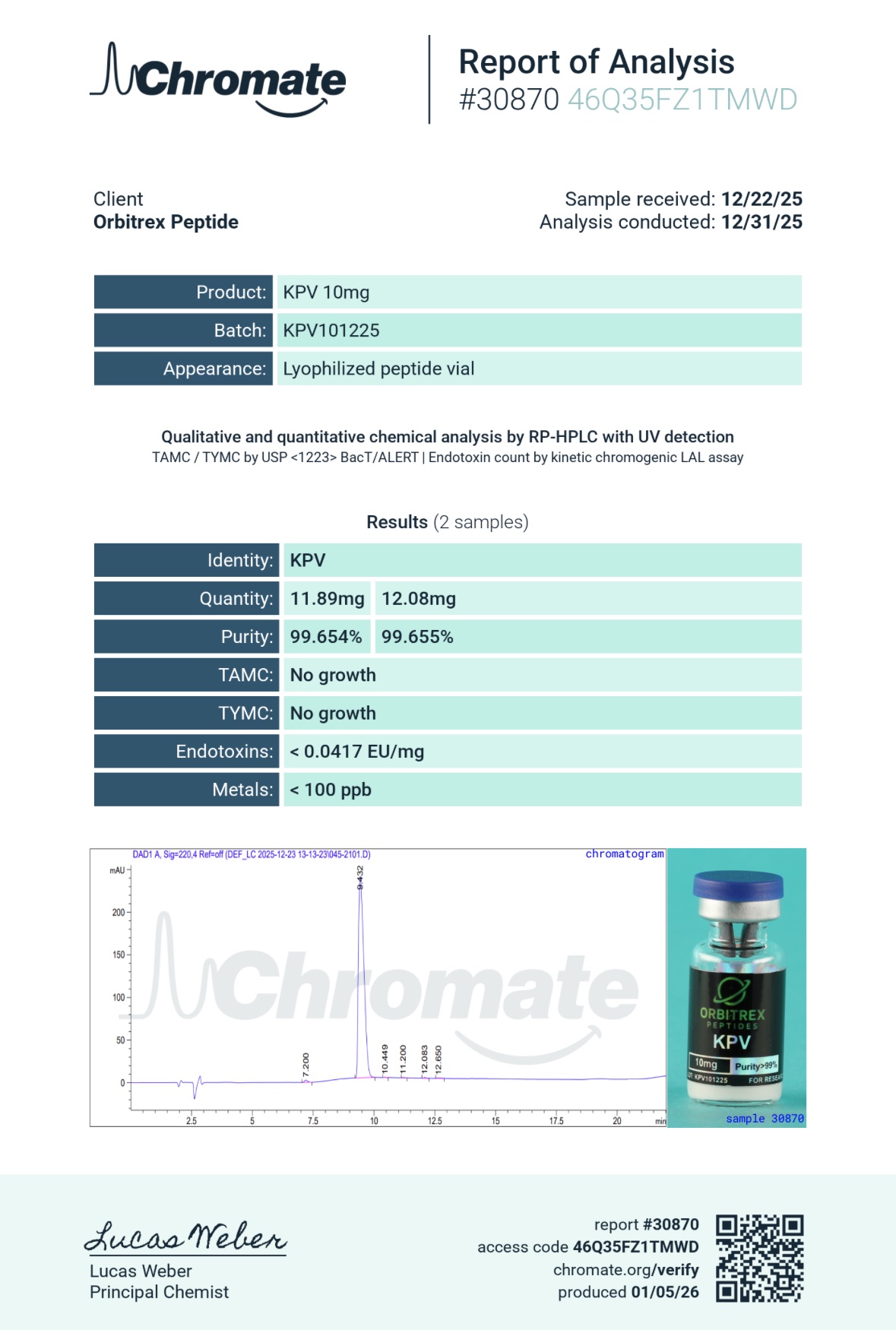
High-grade research compounds must ideally boast an absolute purity of strictly >99%, independently verified by third-party High-Performance Liquid Chromatography (HPLC) and Mass Spectrometry (MS). This rigorous, massive analytical testing guarantees that the biological activity observed during testing is directly, undeniably attributable to the pure, unadulterated tripeptide sequence and absolutely nothing else.
Preparation, Reconstitution, and Storage Protocols
Meticulous, proper handling is profoundly, absolutely critical to maintaining the delicate molecular stability of this Lysine-Proline-Valine sequence. Because the product is securely delivered as a stable, highly sensitive lyophilized powder, researchers must strictly follow clinically sterile protocols for reconstitution and long-term storage.
Standard Reconstitution Protocol
To adequately prepare the highly potent KPV Peptide vial for clinical application, it must be carefully reconstituted using a sterile solvent, almost universally bacteriostatic water or sterile saline.
-
Allow the sealed vial to organically reach room temperature before opening to completely prevent massive condensation from forming inside the glass.
-
Swab the protective rubber stopper vigorously with a 70% isopropyl alcohol wipe to ensure a completely sterile injection site.
-
Carefully inject the calculated volume of bacteriostatic water, specifically aiming the liquid stream against the inner glass wall rather than directly onto the delicate powder bed.
-
Allow the massive powder puck to dissolve gently and naturally. Do not shake the vial vigorously; instead, roll the glass gently between your fingers until the complex solution is completely clear and beautifully transparent.
Long-Term Storage Guidelines
-
Lyophilized Powder: Before liquid reconstitution, the stable freeze-dried solid can be safely stored at room temperature for several weeks without any significant degradation. For extensive long-term storage (spanning several months to years), KPV Peptide vials should be strictly kept in a dark laboratory freezer at -20°C to massively preserve indefinite structural integrity.
-
Reconstituted Solution: Once successfully mixed with bacteriostatic water, the molecular structure becomes highly susceptible to rapid degradation from ambient heat and direct UV light exposure. The active liquid solution must be kept consistently refrigerated at 2°C to 8°C (36°F to 46°F) and should generally be completely utilized within 20 to 30 days to ensure maximum biological efficacy and complete, absolute sterility.
Frequently Asked Questions About KPV Research
Is this peptide safe for people with autoimmune issues?
The highly potent KPV Peptide is currently being researched specifically for its potential in managing autoimmune-related inflammation. Because it acts as a signaling modulator rather than a broad-spectrum immunosuppressant, it allows the body to maintain its defenses against infection while specifically “turning down” the localized inflammatory attacks on the gut and skin.
How long does it take for the anti-inflammatory effects to manifest?
In experimental models, the KPV Peptide exhibits rapid absorption and immediate interaction with the NF-$\kappa$B pathway. Researchers often observe significant reductions in inflammatory markers and localized swelling within 24 to 72 hours of administration, making it one of the most efficient peptides for acute and chronic inflammatory management.
Can it be used in conjunction with other research peptides?
In highly advanced, multi-variable longevity study protocols, the KPV Peptide is frequently and massively successfully researched alongside other tissue-healing compounds, such as BPC-157 (for massive gut-repair synergy) or NAD+ (for absolute cellular energy). Researchers closely monitor these specific, complex combinations to document massive potential synergistic effects on the immune system, skin barrier, and broader, absolute biological optimization pathways.
Conclusion: The Absolute Future of Gut and Skin Health
The ongoing, massive global exploration of melanocortin-derived tripeptides represents the absolute cutting edge of modern biology and severe anti-inflammatory medicine, and the KPV Peptide remains at the very forefront of this massive biochemical scientific revolution. From its profound, heavily documented ability to perfectly regulate the NF-$\kappa$B pathway to its incredible antimicrobial and tissue-repair capabilities, it offers clinical researchers a highly reliable, incredibly potent, and endlessly fascinating compound for biochemical study.
By ensuring your laboratory sources an ultra-high-purity product and adheres strictly to rigorous, sterile handling protocols, you can confidently explore the vast, absolutely untapped potential of this remarkable sequence. As advanced gut health and dermatological research methodologies violently evolve and neurological mapping technology improves, the massive empirical data generated from KPV Peptide studies will undoubtedly continue to heavily unlock profound new understandings of the Gut-Skin Axis, absolute immune health, and ultimate human longevity.
(Disclaimer: All information provided regarding this product is strictly for educational and informational purposes. This product is sold exclusively for laboratory and research use. It is not intended for human consumption, diagnosis, treatment, or cure of any disease or condition.)