Buy GLOW 70 Peptide Blend: The Ultimate Tri-Complex for Research
Elevating Tissue Regeneration with the GLOW 70 Peptide Blend
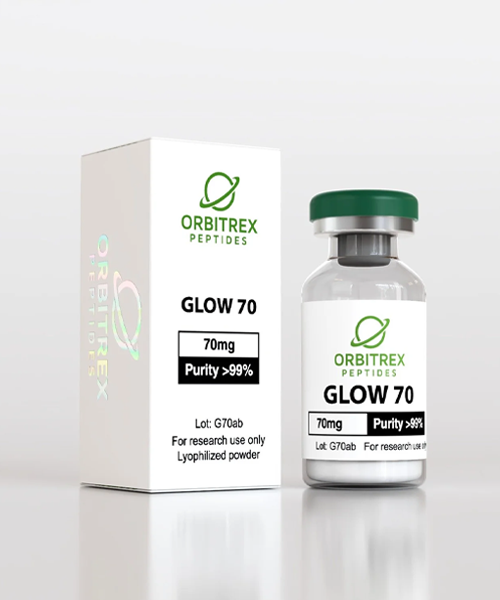
When sourcing materials for advanced tissue regeneration, cellular repair, and anti-aging in-vitro studies, independent researchers and laboratories increasingly seek out the GLOW 70 Peptide Blend. This innovative, high-purity tri-complex formula combines 50mg of GHK-Cu (Copper Peptide), 10mg of BPC-157 (Body Protection Compound), and 10mg of TB-500 (Thymosin Beta-4) into a single, highly stable lyophilized powder.
Designed specifically for meticulous testing facilities, the GLOW 70 Peptide Blend offers a unique opportunity to study the synergistic effects of three of the most prominent regenerative compounds in modern scientific research. By providing these carefully measured ratios in a single vial, this blend eliminates the need for laboratories to manually compound individual peptides, reducing the risk of contamination and standardizing the baseline for complex cellular assays.
The goal of this comprehensive compound is to provide researchers with a multi-faceted tool for investigating soft tissue remodeling, cellular migration, and gene expression in a controlled, in-vitro environment.
The Synergistic Science Behind the GLOW 70 Peptide Blend
Why combine these three specific compounds? The clinical efficacy of the GLOW 70 Peptide Blend as a research tool lies in its multi-pathway approach to structural repair, rapid angiogenesis, and anti-inflammatory cellular response. When studied in-vitro, these three peptides do not merely act in isolation; they work in concert to create a compounded, accelerated regenerative environment.
In a typical in-vitro wound-healing assay or cellular senescence model, a single pathway is often targeted. However, the GLOW 70 Peptide Blend allows researchers to observe the simultaneous modulation of gene transcription (via GHK-Cu), up-regulation of growth factors like VEGF (via BPC-157), and enhanced cellular motility (via TB-500). This “1+1+1 > 3” synergy is what makes this specific tri-complex a cornerstone for advanced regenerative studies.
GHK-Cu (Copper Peptide) – 50mg: The Structural Foundation of the GLOW 70 Peptide Blend
As the largest component of the GLOW 70 Peptide Blend by mass, GHK-Cu (Glycyl-L-Histidyl-L-Lysine bound to a copper ion) acts as the primary driver for structural regeneration and genetic modulation. First isolated from human plasma in 1973 by Dr. Loren Pickart, this naturally occurring tripeptide has a profoundly high affinity for copper(II) ions.
In laboratory settings, copper is a critical transition metal utilized by various enzymes, including lysyl oxidase, which is essential for the cross-linking of collagen and elastin in the extracellular matrix. By facilitating the targeted delivery of copper at the cellular level, the GHK-Cu contained within the GLOW 70 Peptide Blend acts as a powerful modulator of tissue remodeling.
Scientific observation in cell culture models demonstrates that GHK-Cu significantly upregulates the synthesis of both collagen and elastin, directly influencing the structural integrity of the extracellular matrix. Furthermore, microarray analysis has shown that GHK-Cu is capable of modulating the expression of thousands of human genes, essentially resetting the gene expression profile of senescent (aging) cells to a younger, more active state.
In-vitro studies utilizing the GLOW 70 Peptide Blend often focus on the GHK-Cu component’s ability to promote the survival of basal stem cells, mitigate cellular oxidative stress by increasing the production of antioxidant enzymes like superoxide dismutase, and accelerate the breakdown of malformed scar tissue by modulating metalloproteinases.
BPC-157 (Body Protection Compound) – 10mg: Advanced Soft Tissue Repair
The second critical component of the GLOW 70 Peptide Blend is BPC-157. This is a 15-amino-acid partial sequence (a pentadecapeptide) derived from a naturally occurring protective protein originally discovered in human gastric juice. While its natural biological function is to protect the endothelial lining of the digestive tract and promote mucosal healing, isolated BPC-157 has demonstrated extraordinary regenerative capabilities across a wide variety of tissue types when applied in laboratory models.
Within the GLOW 70 Peptide Blend, BPC-157 provides aggressive support for soft tissue healing mechanisms. It is scientifically proven to accelerate the cellular recovery of tendons, ligaments, muscles, and even elements of the central nervous system.
The primary mechanism of action for BPC-157 observed in-vitro involves the dramatic up-regulation of Vascular Endothelial Growth Factor (VEGF). By enhancing VEGF expression, BPC-157 promotes rapid angiogenesis—the formation of new blood vessels from existing ones. This is a vital step in tissue regeneration, as improved vascular networks ensure that repairing cells receive adequate oxygen and nutrients.
Additionally, researchers utilizing the GLOW 70 Peptide Blend study how BPC-157 influences the migration and proliferation of fibroblasts (the cells responsible for producing collagen). BPC-157 has been observed to activate the FAK-paxillin signaling pathway, which essentially acts as a molecular “motor” that drives fibroblasts to migrate rapidly toward sites of tissue damage in cell culture assays. It also modulates the nitric oxide (NO) system, providing a potent cytoprotective effect that shields cells from oxidative damage during the inflammatory phase of the healing process.
TB-500 (Thymosin Beta-4) – 10mg: Angiogenesis and Cellular Migration
The final component of the GLOW 70 Peptide Blend is TB-500, a synthetic version of the naturally occurring peptide Thymosin Beta-4. Thymosin Beta-4 is a highly conserved protein found in virtually all animal and human cells, with particularly high concentrations found in blood platelets and the fluid surrounding wounds.
The defining characteristic of TB-500 within the GLOW 70 Peptide Blend is its role as an actin-sequestering protein. Actin is a crucial cellular protein that forms the microfilaments of the cytoskeleton, essential for maintaining cell structure, enabling cellular mobility, and facilitating cell division. By binding to actin monomers and preventing their premature polymerization, TB-500 maintains a pool of free actin that the cell can rapidly deploy when needed for movement or structural changes.
In practical laboratory applications, this up-regulation of actin dynamics facilitates rapid endothelial cell migration. When researchers apply the GLOW 70 Peptide Blend to scratch-wound assays in a petri dish, the TB-500 component allows cells to literally move faster across the gap to close the “wound.”
Furthermore, similar to BPC-157, TB-500 leads to profound angiogenesis. However, it approaches blood vessel formation through a different pathway, often involving the up-regulation of matrix metalloproteinases that clear a path through the extracellular matrix for new vessels to grow. By combining TB-500’s cellular mobility enhancements with BPC-157’s VEGF up-regulation and GHK-Cu’s structural support, the GLOW 70 Peptide Blend creates an unparalleled environment for studying comprehensive tissue repair.
Verifiable Science Supporting the GLOW 70 Peptide Blend
The independent mechanisms of the compounds found in this tri-complex are extensively documented in decades of peer-reviewed literature. Researchers investigating the fundamental properties of these peptides can find thousands of published studies detailing their physiological effects on isolated cell lines and animal models.
For authoritative data regarding the regenerative properties of the Copper Peptides found in this formula, researchers can review extensive physiological studies via the National Center for Biotechnology Information (NCBI). Accessing this foundational research provides a solid baseline for laboratories planning to utilize the GLOW 70 Peptide Blend in their own novel analytical experiments.
Ideal In-Vitro Applications for the GLOW 70 Peptide Blend
Because of its multi-pathway approach, the GLOW 70 Peptide Blend is highly versatile and can be deployed in a variety of complex in-vitro assays. Laboratories purchasing this compound frequently utilize it for the following research models:
-
Fibroblast Proliferation Assays: Observing the rate at which connective tissue cells multiply and migrate when exposed to the tri-complex compared to a control group or single-peptide variables.
-
Endothelial Tube Formation Assays: Utilizing the combined angiogenic properties of BPC-157 and TB-500 to study the development of microvascular networks in a controlled, synthetic matrix.
-
Cellular Senescence and Aging Models: Applying the GLOW 70 Peptide Blend to aged cell cultures to observe changes in gene expression, specifically tracking the up-regulation of youth-associated genes and the down-regulation of inflammatory markers mediated by GHK-Cu.
-
Oxidative Stress Resistance: Subjecting cell cultures to oxidative damage (e.g., via hydrogen peroxide exposure) and measuring the cytoprotective and anti-apoptotic (anti-cell death) effects of the compounded peptides.
Independent Laboratory Testing and Purity Standards for the GLOW 70 Peptide Blend
At Orbitrex, we understand that your analytical data is only as accurate as the materials you test. If a peptide blend contains impurities, excess salts, or degraded amino acid chains, it will introduce unpredictable variables into your research, effectively rendering your data useless.
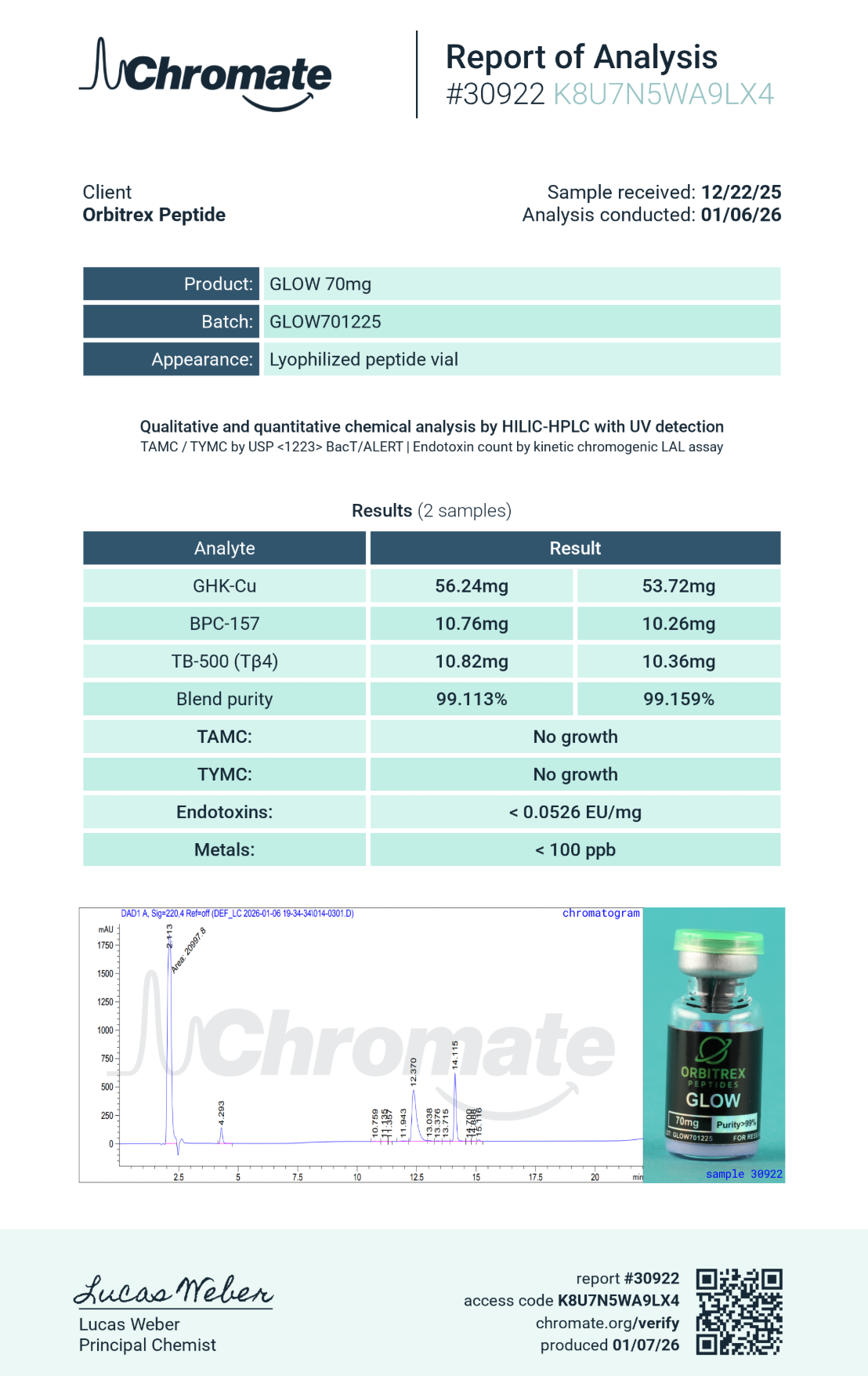
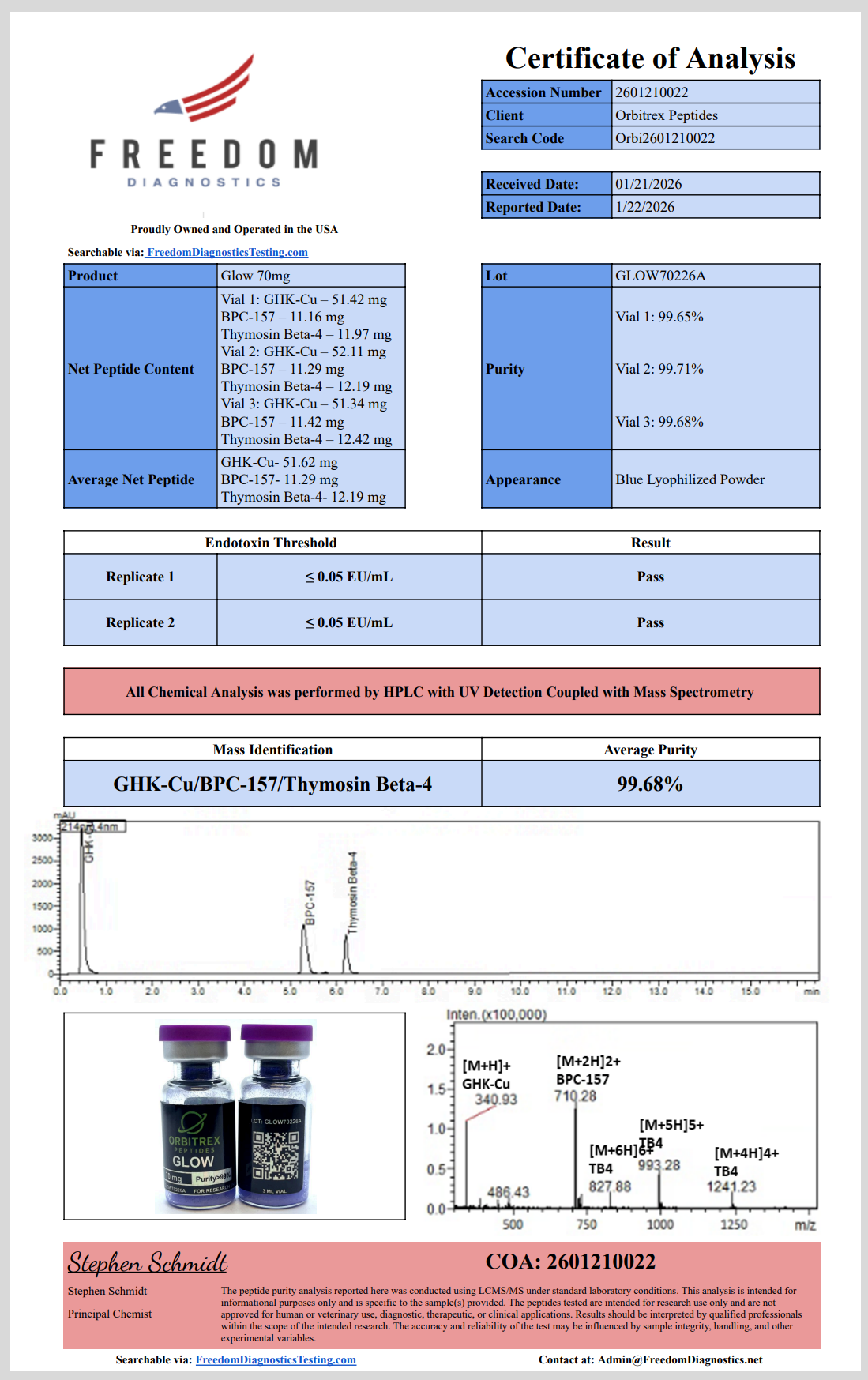
This is why we guarantee that every single batch of our GLOW 70 Peptide Blend undergoes rigorous, independent third-party testing before it is ever cleared for distribution to the scientific community.
Our primary testing methodologies include High-Performance Liquid Chromatography (HPLC) and Liquid Chromatography-Mass Spectrometry (LC-MS). The HPLC analysis ensures that the molecular weight and retention time of the powder match the exact profiles of pure GHK-Cu, BPC-157, and TB-500, separating out any potential contaminants. The Mass Spectrometry confirms the exact amino acid sequence of the peptides to guarantee they have been synthesized perfectly without any missing or malformed links in the chain.
We mandate strictly >99% purity for the GLOW 70 Peptide Blend, ensuring your laboratory receives uncompromised materials entirely free from binders, heavy metals, synthetic impurities, or manufacturing byproducts. When you source your materials from Orbitrex, you are sourcing reliability.
Preparation and Handling of the GLOW 70 Peptide Blend
Due to the fragile molecular structure of amino acid chains, the proper preparation, reconstitution, and storage of the GLOW 70 Peptide Blend are critical to maintaining its efficacy and preventing degradation prior to your experiments.
The product is shipped as a lyophilized (freeze-dried) solid powder inside a sterile, vacuum-sealed glass vial. Lyophilization removes the water from the peptide solution under low temperature and pressure, which stabilizes the fragile molecular bonds and allows the GLOW 70 Peptide Blend to survive the shipping process without rapid degradation.
Reconstitution Protocols
To prepare the GLOW 70 Peptide Blend for in-vitro application, the powder must be reconstituted into a liquid solution. It is highly recommended to use sterile bacteriostatic water (water containing 0.9% benzyl alcohol) or sterile saline, depending on the specific requirements of your cell culture.
When introducing the diluent into the vial containing the GLOW 70 Peptide Blend, standard sterile laboratory protocols must be observed:
-
Swab the rubber stopper of both the peptide vial and the diluent vial with 70% isopropyl alcohol.
-
Using a sterile syringe, draw the desired volume of diluent.
-
Inject the diluent slowly into the peptide vial. Crucial: Direct the stream of the liquid against the inner glass wall of the vial rather than shooting it directly into the lyophilized powder. The force of a direct liquid stream can physically shear the delicate peptide bonds of the GLOW 70 Peptide Blend, damaging the molecules before they are ever used.
-
Do not shake the vial. Gently swirl or roll the vial between your fingers until the powder has completely dissolved into a clear solution.
Storage Guidelines for the GLOW 70 Peptide Blend
Maintaining the molecular integrity of the GLOW 70 Peptide Blend post-reconstitution is paramount to your research success.
Unreconstituted (Lyophilized Powder): If you are not utilizing the blend immediately, the dry powder should be stored away from direct sunlight in a dry environment. For short-term storage (up to 30 days), room temperature is acceptable. For long-term storage (up to 24 months), the lyophilized vials should be kept in a laboratory freezer at -20°C.
Reconstituted (Liquid Solution): Once bacteriostatic water or saline has been introduced to the GLOW 70 Peptide Blend, the structural clock begins ticking. The reconstituted vial must be immediately refrigerated at 2°C to 8°C (36°F to 46°F). Even when kept at precise refrigerated temperatures, the mixed solution should be utilized in your assays within 20 to 30 days. Beyond this window, the peptide chains will begin to naturally degrade, losing their biological potency and potentially skewing your analytical data.
Disclaimer: All products listed by Orbitrex, including the GLOW 70 Peptide Blend, are sold strictly for in-vitro laboratory research and analytical purposes only. They are not intended for human consumption, ingestion, diagnostic, therapeutic, or agricultural use. Our products are not FDA-approved for human use. Any communications implying human use, clinical trials on unapproved subjects, or bodily injection will result in the immediate cancellation of your account and permanent restriction from our supply chain.