Comprehensive Research Guide to 1G-SGT 5mg: Advanced GLP-1 Receptor Agonist Applications
When exploring the absolute cutting edge of metabolic regulation, endocrinology, and glycemic management in clinical research, few synthetic peptides offer the profound, systemic profile of 1G-SGT 5mg. As a highly modified, long-acting Glucagon-Like Peptide-1 (GLP-1) receptor agonist, this remarkable compound has fundamentally shifted how scientists approach laboratory studies focused on insulin secretion, cellular energy homeostasis, and adipose tissue reduction.
This comprehensive guide delves deeply into the biochemical science, structural mechanisms, and rigorous laboratory applications of 1G-SGT 5mg, providing scientific professionals, longevity researchers, and dedicated biohackers with the critical data required to fully understand its vast potential. Whether your laboratory is investigating pancreatic beta-cell function, studying the impact of delayed gastric emptying on metabolic rate, or exploring novel pathways for reversing diet-induced obesity, this specific formulation offers a highly reliable, heavily documented profile for rigorous scientific observation.
The History and Development of the GLP-1 Analog
To fully grasp the massive efficacy of this metabolic peptide, it is essential to trace its scientific origins. The compound was developed as a direct synthetic analog of the naturally occurring human incretin hormone GLP-1 (Glucagon-Like Peptide-1), which is secreted by the intestines in response to food intake. Researchers were initially searching for a highly stable way to replicate the body’s natural incretin effect—which triggers insulin release—while vastly enhancing the peptide’s metabolic stability.
Natural endogenous GLP-1 is degraded almost instantly (within roughly two minutes) by the ubiquitous enzyme dipeptidyl peptidase-4 (DPP-4). By isolating the GLP-1 sequence and radically modifying its molecular structure to completely resist this rapid enzymatic breakdown, scientists successfully engineered a synthetic compound that offered profound, long-lasting systemic benefits. Today, the standard, ultra-pure preparation utilized in continuing global metabolic studies is the highly stable 1G-SGT 5mg lyophilized format.
What is 1G-SGT 5mg? The Structural Science Behind the Peptide
At its core, 1G-SGT 5mg is a synthetic, 31-amino-acid peptide that shares 94% structural homology with native human GLP-1. The critical scientific breakthrough lies in the targeted molecular modifications that differentiate it from its natural counterpart.
First, the amino acid alanine at position 8 is replaced by alpha-aminoisobutyric acid (Aib). This highly specific substitution is the primary shield that completely protects the peptide from rapid degradation by the DPP-4 enzyme. Second, a massive structural alteration occurs at position 26, where a lysine residue is expertly tethered to a C18 fatty diacid (stearic diacid) via a customized hydrophilic spacer (a short PEG sequence and glutamic acid).
This fatty acid chain is functionally crucial. It allows the peptide to reversibly bind to serum albumin in the bloodstream, effectively creating a slow-release biological reservoir. This modification drastically extends the peptide’s half-life and ensures its potent metabolic activity is maintained long enough to exert significant, continuous effects on the endocrine system.
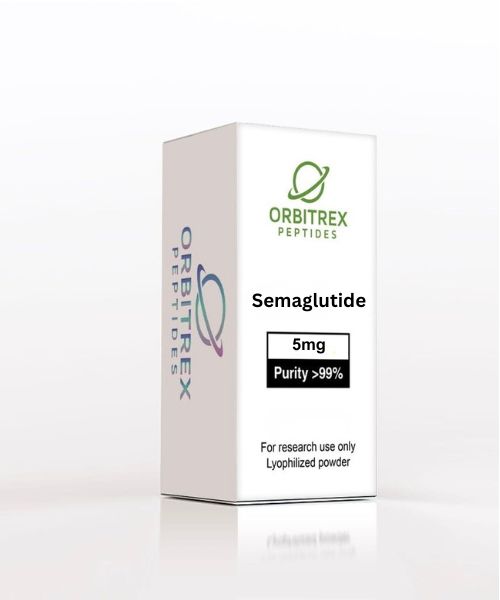
In modern research environments, the compound is universally supplied as a highly stable, lyophilized (freeze-dried) powder. The specific 1G-SGT 5mg dosage format is highly preferred in active laboratory settings because it provides an ideal, highly manageable yield for the critical initial titration phases of research. This versatile volume allows researchers to perform precise, targeted micro-dosing measurements and maintain absolute consistency during the baseline observation of metabolic shifts.
Pharmacokinetics: Absorption, Distribution, and Metabolism
Understanding the complex pharmacokinetic profile of this GLP-1 analog is vital for properly structuring laboratory experiments and determining accurate dosing intervals in clinical animal models.
Absorption and Systemic Penetration
When administered via subcutaneous injection in experimental metabolic models, the peptide exhibits incredibly steady, highly predictable absorption. The unique, heavily modified molecular structure, combined with its albumin-binding properties, allows it to slowly and consistently release into systemic circulation. Studies indicate that maximum active plasma concentrations (Tmax) are typically reached 1 to 3 days post-administration, making it a highly reliable compound for steady-state metabolic interventions.
Distribution and Biological Half-Life
Once in the bloodstream, it distributes widely throughout the body, targeting GLP-1 receptors in the pancreas, the gastrointestinal tract, and the brain. The literal plasma half-life of the compound is extraordinarily long—approximately 7 full days (165 hours) in standard test models. Because the continuous activation caused by 1G-SGT 5mg can persist for over a week from a single application, the metabolic benefits, glycemic control, and appetite-regulating cascades vastly outlast the acute administration window, making it the premier choice for once-weekly study protocols.
The Mechanism of Action: How 1G-SGT 5mg Interacts with the Body
Understanding how this specific incretin analog exerts its profound metabolic effects requires a highly detailed dive into endocrinology. Its mechanism of action is distinctly multifaceted, operating seamlessly across several biological systems simultaneously to force the body into an optimized state.
1. Potent GLP-1 Receptor Activation
One of the primary mechanisms observed in laboratory models is its profound ability to selectively bind to and activate the GLP-1 receptor. By mimicking natural incretins, 1G-SGT 5mg heavily influences the pancreas. It stimulates glucose-dependent insulin secretion from pancreatic beta cells while simultaneously suppressing the inappropriate secretion of glucagon from alpha cells. This means it only lowers blood sugar when levels are dangerously high, vastly reducing the risk of severe hypoglycemia during research observation.
2. Delaying Gastric Emptying
Beyond the pancreas, this peptide heavily targets the gastrointestinal system. The delayed gastric emptying naturally induced by 1G-SGT 5mg slows down the rate at which glucose enters the bloodstream after food intake. This mechanism blunts postprandial (post-meal) glucose spikes, creating a far smoother, far more controlled metabolic curve that researchers monitor closely during long-term nutritional studies.
3. Neurological Appetite Regulation
The compound successfully crosses the blood-brain barrier to directly interact with the hypothalamus—the region of the brain responsible for hunger and satiety. This highly nuanced neuro-regulatory effect is exactly why 1G-SGT 5mg is aggressively studied for its massive potential to completely suppress excessive caloric intake, radically reduce cravings, and artificially induce a feeling of total fullness, making it a cornerstone in modern obesity and weight-management research models.
Primary Research Applications in the Laboratory
The remarkably diverse biological activities of this structure have led to a rapidly expanding array of high-level research applications. The baseline 1G-SGT 5mg formulation is particularly useful for exploring the following cutting-edge scientific avenues:
Metabolic Regulation and Glycemic Control
In the realm of endocrine science, this peptide is considered the absolute gold standard for studying Type 2 Diabetes models. Studies frequently focus on its capacity to aggressively lower HbA1c levels and restore pancreatic insulin sensitivity in animal models. Researchers utilize it to observe how biochemical interventions can completely neutralize insulin resistance without the exhausting cellular burnout associated with older sulfonylurea drugs.
Adipose Tissue Reduction and Weight Management
Because of its dual ability to slow gastric motility and suppress neurological hunger signals, it indirectly acts as a profoundly powerful weight-loss catalyst. Experimental models show that administering the sequence alongside standard caloric tracking significantly reduces visceral adipose tissue (body fat) at an unprecedented rate. Researchers deeply use the 1G-SGT 5mg vial to map how initial metabolic changes can be safely monitored during the early stages of a high-fat diet study.
Cardiovascular and Neuroprotective Potential
Chronic, uncontrolled blood sugar physically destroys the vascular system over time, often leading to systemic inflammation and profound cardiovascular disease. Studies involving 1G-SGT 5mg have deeply explored its ability to reboot compromised endothelial function. By regulating systemic inflammation and lowering blood pressure markers, it is continuously investigated as a critical tool for reducing major adverse cardiovascular events (MACE) and building physical resilience against long-term metabolic syndrome.
Comparative Analysis: 1G-SGT 5mg vs. Other Peptides
When sourcing premium peptides for advanced metabolic study, researchers frequently encounter different variations, generations, and closely related compounds. Understanding how the standard structure compares to its modern counterparts is absolutely essential for designing highly accurate, reproducible experiments.
-
Standard 1G-SGT 5mg: This is the foundational, strictly single-agonist sequence (targeting only GLP-1). It provides baseline glycemic control, profound appetite suppression, and is the most extensively documented long-acting incretin version in modern scientific literature. It is ideal for baseline metabolic studies and offers a highly predictable, incredibly well-tolerated biological profile.
-
Comparison to Tirzepatide (Dual Agonists): While functionally related, newer compounds like Tirzepatide act as dual-agonists, targeting both the GLP-1 and GIP (glucose-dependent insulinotropic polypeptide) receptors simultaneously. This dual action often results in even faster total adipose reduction. Conversely, 1G-SGT 5mg is generally utilized in research focused strictly on pure GLP-1 pathway mapping and researchers seeking the most robust, historically proven safety data.
-
Comparison to Liraglutide: Liraglutide is an older-generation GLP-1 analog that requires daily administration due to a much shorter half-life. The massive C18 fatty acid chain on the modern formulation means the newer compound vastly outperforms Liraglutide in both convenience and sustained metabolic leveling during week-long observational studies.
For laboratories establishing foundational metabolic data or replicating modern academic studies, the standard, unmodified long-acting sequence remains the absolute gold standard for structural integrity and reliable biological expression.
The Importance of High-Purity Synthesis in Laboratory Settings
In any rigorous, peer-reviewed scientific study or biohacking protocol, the sheer absolute quality of the primary compound directly dictates the absolute validity of the final results. Utilizing a high-purity 1G-SGT 5mg synthesis is entirely non-negotiable for serious clinical researchers and dedicated metabolic optimizers.
Impurities in standard peptide manufacturing can heavily include truncated sequences (incomplete peptide chains), deletion sequences, or highly toxic chemical byproducts left over from the complex resin cleavage process. If a laboratory inadvertently utilizes a compromised batch of 1G-SGT 5mg, these invisible impurities can inadvertently bind to unintended receptors, trigger massive, uncontrolled immune responses (such as anti-drug antibodies) in animal models, or heavily skew quantitative glycemic data, rendering months of incredibly expensive research completely invalid.
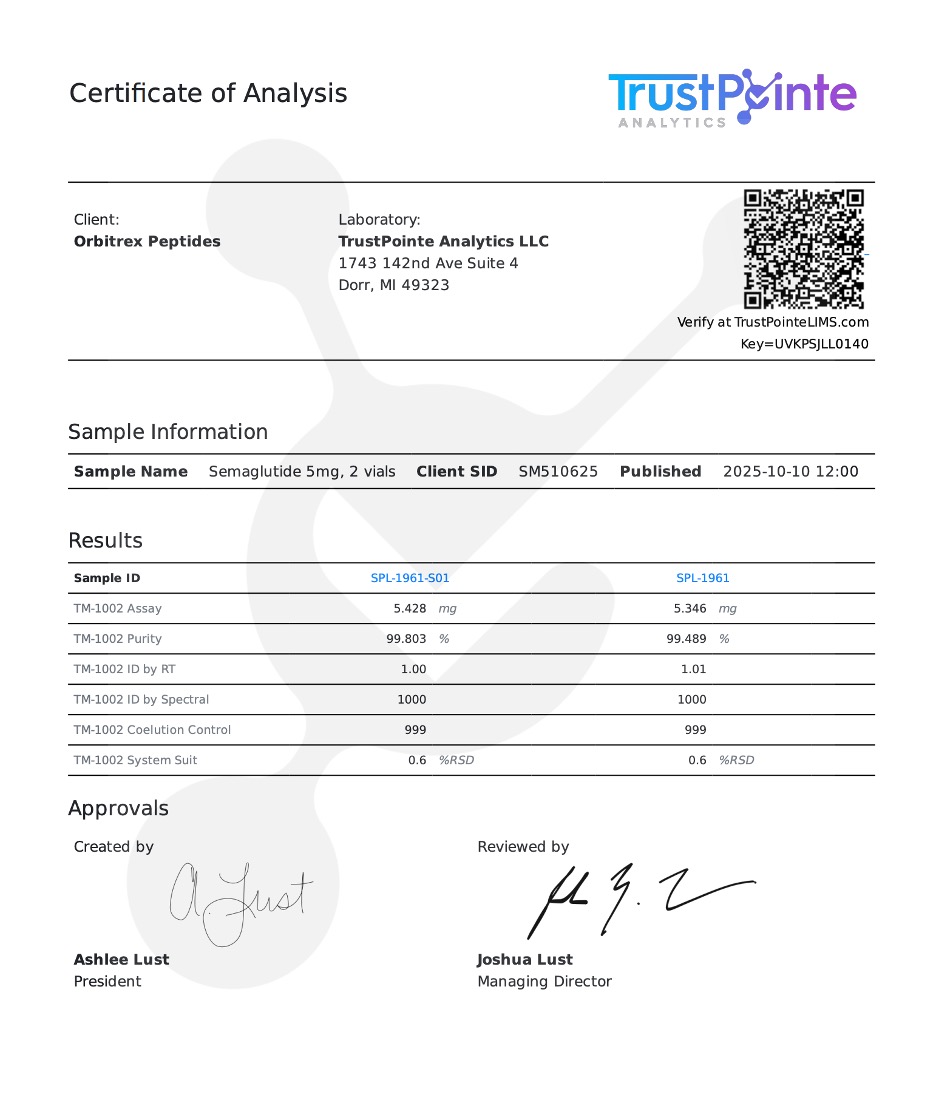
High-grade research compounds must ideally boast a purity of strictly >99%, independently verified by third-party High-Performance Liquid Chromatography (HPLC) and Mass Spectrometry (MS). This rigorous analytical testing guarantees that the biological activity observed during testing is directly, undeniably attributable to the intended 31-amino-acid GLP-1 analog sequence and nothing else.
Preparation, Reconstitution, and Storage Protocols
Meticulous, proper handling is profoundly critical to maintaining delicate molecular stability and preventing the rapid degradation of fragile amino acid bonds. Because the product is securely delivered as a stable lyophilized powder, researchers must strictly follow clinically sterile protocols for reconstitution and long-term storage.
Standard Reconstitution Protocol
To adequately prepare the highly potent 1G-SGT 5mg vial for clinical application, it must be carefully reconstituted using a sterile solvent, almost universally bacteriostatic water or sterile saline.
-
Allow the sealed vial to organically reach room temperature before opening to completely prevent condensation from forming inside the glass, which can introduce destructive premature moisture to the lyophilized puck.
-
Swab the protective rubber stopper vigorously with a 70% isopropyl alcohol wipe to ensure a completely sterile injection site.
-
Carefully inject the calculated volume of bacteriostatic water, specifically aiming the liquid stream against the inner glass wall rather than directly onto the delicate powder bed. Direct, forceful liquid pressure can permanently damage the incredibly fragile molecular bonds of the peptide.
-
Allow the powder to dissolve gently and naturally. Do not shake the vial vigorously under any circumstances; instead, roll the glass gently between your fingers until the solution is completely clear, transparent, and absolutely free of any floating particulates.
Long-Term Storage Guidelines
-
Lyophilized Powder: Before liquid reconstitution, the stable freeze-dried solid can be safely stored at room temperature for several weeks without any significant degradation, making it highly stable for international shipping. For extensive long-term storage (spanning several months to years), 1G-SGT 5mg vials should be strictly kept in a laboratory freezer at -20°C to preserve indefinite structural integrity.
-
Reconstituted Solution: Once successfully mixed with bacteriostatic water, the molecular structure instantly becomes highly susceptible to rapid degradation from ambient heat, physical agitation, and direct UV light exposure. The active liquid solution must be kept consistently refrigerated at 2°C to 8°C (36°F to 46°F) and should generally be completely utilized within 30 to 56 days to ensure maximum biological efficacy and complete sterility.
Frequently Asked Questions About 1G-SGT 5mg Research
What makes the 5mg dosage size optimal for research? The highly versatile 1G-SGT 5mg vial provides an excellent balance of volume and cost-efficiency for active laboratories. It yields enough reconstituted solution for rigorous, measured titration trials on animal models, allowing researchers to observe how metabolic pathways react to the compound without the risk of solution degradation over an excessively long testing period.
Is the peptide structurally stable during standard international transit? Yes, in its lyophilized, freeze-dried form, the peptide is remarkably chemically robust. The advanced freeze-drying process completely removes the moisture that traditionally facilitates rapid molecular degradation. While it is always best practice to immediately store it in a cool environment upon arrival, standard transit times at ambient temperatures do not compromise the integrity of the powder.
Can it be used in conjunction with other research peptides? In advanced, multi-variable study protocols, 1G-SGT 5mg is frequently and successfully researched alongside other metabolic or tissue-healing peptides, such as AOD-9604 (for targeted lipolysis observation) or BPC-157 (for systemic tissue recovery models). Researchers closely monitor these specific combinations to document massive potential synergistic effects on the central nervous system, cellular energy expenditure, and broader biological healing pathways.
Conclusion: The Future of Metabolic Peptide Research
The ongoing exploration of synthetic metabolic peptides represents the absolute cutting edge of modern endocrinology and obesity management, and 1G-SGT 5mg remains at the very forefront of this biochemical scientific revolution. From its profound, heavily documented ability to perfectly regulate the pancreatic GLP-1 system to its incredible neuro-regulatory capabilities in suppressing extreme caloric intake, it offers clinical researchers a highly reliable, incredibly potent, and endlessly fascinating compound for biochemical study.
By ensuring your laboratory sources an ultra-high-purity product and adheres strictly to rigorous, sterile handling protocols, you can confidently explore the vast, untapped potential of this remarkable incretin analog. As advanced obesity research methodologies violently evolve and metabolic mapping technology improves, the massive empirical data generated from 1G-SGT 5mg studies will undoubtedly continue to unlock profound new understandings of cardiovascular health, systemic insulin resistance, and ultimate metabolic stability.
(Disclaimer: All information provided regarding this product is strictly for educational and informational purposes. This product is sold exclusively for laboratory and research use. It is not intended for human consumption, diagnosis, treatment, or cure of any disease or condition.)