Elevating Regenerative Research with the BPC-157 10mg Peptide
As the modern scientific community continues to explore the complex biochemical mechanisms of cellular repair, tissue regeneration, and cytoprotection, the demand for highly stable, reliable molecular tools has never been greater. Enter the BPC-157 10mg Peptide, an industry-leading synthetic compound designed specifically to support rigorous, high-level in-vitro laboratory analysis and complex cellular modeling.
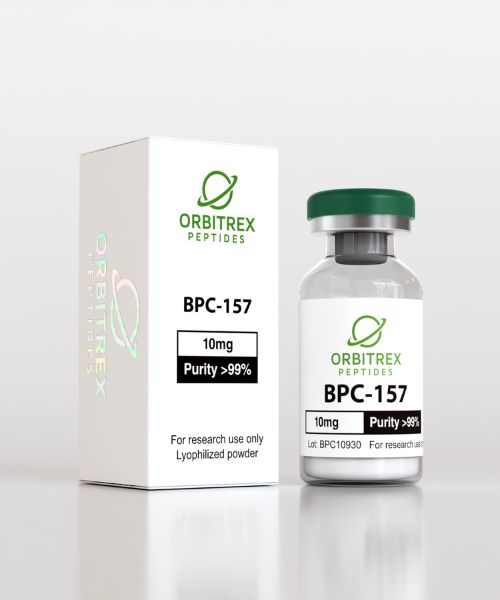
This highly stable, lyophilized powder represents one of the most fascinating discoveries in modern regenerative biology. By providing a precise, pre-measured 10mg dosage in a sterile, vacuum-sealed vial, the BPC-157 10mg Peptide ensures completely standardized baselines across all of your complex cellular assays, receptor binding experiments, and tissue engineering models.
Purchasing this isolated, high-purity pentadecapeptide from Orbitrex eliminates the profound variables of structural degradation and molecular contamination often seen in lower-grade research materials. This provides independent researchers and testing facilities with an incredibly stable, highly reactive tool for investigating cellular signaling cascades, aggressive angiogenesis, and soft-tissue remodeling over extended analytical periods.
The Biochemical Origins of the BPC-157 10mg Peptide
To truly understand the profound analytical and research value of the BPC-157 10mg Peptide, scientists must first examine its unique biological origins. “BPC” stands for Body Protection Compound. It is a synthetic, 15-amino-acid partial sequence (a pentadecapeptide) derived from a much larger, naturally occurring protective protein originally discovered in human gastric juice in the early 1990s.
In natural biological systems, the primary evolutionary function of this parent protein is entirely cytoprotective. It exists to protect the delicate endothelial lining of the digestive tract from the highly corrosive effects of gastric acid, actively promoting mucosal healing and cellular survival in a remarkably hostile biological environment.
However, when researchers isolated this specific 15-amino-acid sequence and applied it to isolated cell cultures in a laboratory setting, they discovered something extraordinary. The isolated BPC-157 10mg Peptide did not merely demonstrate cytoprotective effects on gastric cells; it demonstrated universal regenerative capabilities across a staggeringly wide variety of tissue types, including tendons, ligaments, skeletal muscle, bone, and even the central nervous system.
Unlike many other research peptides that act as single-receptor agonists, the BPC-157 10mg Peptide operates as a systemic modulator, influencing multiple cellular pathways simultaneously to orchestrate a highly accelerated, highly organized biological repair response.
The Synergistic Mechanisms of the BPC-157 10mg Peptide
The clinical and analytical value of the BPC-157 10mg Peptide as a primary research tool lies in its comprehensive, multi-pathway approach to cellular health and structural regeneration. When applied to in-vitro models—particularly those mimicking severe physical trauma, oxidative stress, or advanced cellular degradation—this peptide engages in a highly orchestrated sequence of biological events.
Vascular Endothelial Growth Factor (VEGF) Upregulation
Perhaps the most heavily researched mechanism of action for the BPC-157 10mg Peptide observed in-vitro involves its profound impact on angiogenesis. Angiogenesis is the physiological process through which new blood vessels form from pre-existing vessels. This is a vital, non-negotiable step in the tissue regeneration process, as damaged or repairing cells require massive amounts of oxygen, nutrients, and biological building blocks to execute their programmed repair sequences.
When researchers introduce the BPC-157 10mg Peptide to a cellular environment, it aggressively upregulates the expression of Vascular Endothelial Growth Factor (VEGF). VEGF is the primary signal protein produced by cells that stimulates the formation of blood vessels.
By vastly enhancing VEGF expression and stimulating the corresponding VEGFR2 receptors, the BPC-157 10mg Peptide promotes the rapid proliferation, migration, and survival of endothelial cells. In laboratory tube-formation assays, cell cultures treated with this peptide demonstrate the ability to construct complex, highly organized microvascular networks at an exponentially faster rate than control groups. This makes the compound an invaluable asset for scientists studying ischemic tissue damage, cardiovascular repair models, and engineered tissue grafting.
Fibroblast Migration and FAK-Paxillin Activation
While endothelial cells build the biological supply lines, fibroblasts act as the primary biological construction workers. Fibroblasts are the most common cells found in connective tissue, and they are responsible for synthesizing the extracellular matrix, laying down collagen, and providing the structural framework for all animal tissues.
In typical in-vitro scratch-wound assays (where a physical gap is created in a monolayer of cells), researchers utilize the BPC-157 10mg Peptide to study cellular motility. The peptide has been observed to drastically accelerate the migration of fibroblasts toward the site of cellular damage.
It accomplishes this feat by activating the FAK-paxillin signaling pathway. Focal Adhesion Kinase (FAK) and paxillin are intracellular proteins that act essentially as the molecular “motors” and “steering mechanisms” for cellular movement. By highly phosphorylating these proteins, the BPC-157 10mg Peptide hyper-activates the fibroblasts, causing them to migrate rapidly and lay down new, highly organized collagen networks. This precise mechanism is why the compound is the premier choice for laboratories studying the repair of avascular tissues, such as tendons and ligaments, which notoriously heal slowly due to a lack of natural blood flow.
Nitric Oxide (NO) System Modulation
Beyond its ability to build new blood vessels and accelerate connective tissue repair, the BPC-157 10mg Peptide exerts massive influence over the cellular Nitric Oxide (NO) system. Nitric oxide is a critical cellular signaling molecule heavily involved in vasodilation, immune response, and the regulation of oxidative stress.
During severe cellular trauma, the NO system often becomes imbalanced, leading either to severe vasoconstriction (choking off blood supply) or the excessive production of reactive oxygen species (causing further cellular damage). In-vitro analysis demonstrates that the BPC-157 10mg Peptide acts as an incredible modulating agent for the NO system. It does not merely push the system in one direction; rather, it stabilizes it, inducing NO synthesis when vasodilation is required for repair, and suppressing excessive NO production when it threatens to cause oxidative cellular death.
This potent cytoprotective effect essentially shields repairing cells from the toxic byproducts of the inflammatory healing phase, ensuring a higher rate of cellular survival during advanced laboratory assays.
Verifiable Science Supporting the BPC-157 10mg Peptide
The complex biochemical mechanisms, angiogenic properties, and profound cytoprotective effects of gastric pentadecapeptides are extensively documented in modern, peer-reviewed scientific literature. Researchers investigating the fundamental properties of these advanced amino acid chains can find decades of published studies detailing their physiological effects on isolated cell lines and highly complex animal models.
For highly authoritative, peer-reviewed data regarding the exact receptor-binding profiles, structural modifications, and vascular signaling pathways of this compound, researchers are highly encouraged to review extensive physiological studies via the National Center for Biotechnology Information (NCBI). Accessing this foundational research provides a rock-solid, verifiable baseline for laboratories planning to utilize the BPC-157 10mg Peptide in their own novel analytical and regenerative experiments.
Ideal In-Vitro Applications for the BPC-157 10mg Peptide
Because of its unparalleled multi-pathway approach to cellular signaling, angiogenesis, and structural repair, the BPC-157 10mg Peptide is incredibly versatile and can be deployed in a vast variety of complex in-vitro assays. Laboratories purchasing this advanced compound frequently utilize it for the following primary research models:
-
Endothelial Tube Formation Assays: Utilizing the compound in specialized matrices (like Matrigel) to observe the precise rate at which endothelial cells proliferate, migrate, and assemble into complex, three-dimensional capillary-like structures under the influence of massive VEGF upregulation.
-
Fibroblast Scratch-Wound Assays: Creating a mechanical “wound” in a confluent monolayer of tendon or ligament fibroblasts, and applying the BPC-157 10mg Peptide to measure the exact velocity and organization of cellular migration via the FAK-paxillin pathway compared to an untreated control group.
-
Oxidative Stress and Cytotoxicity Models: Subjecting cell cultures to severe chemical stressors (such as hydrogen peroxide or alcohol-induced toxicity) and measuring the cytoprotective, anti-apoptotic (anti-cell-death) effects of the peptide via its modulation of the Nitric Oxide system.
-
Western Blotting and Protein Expression: Extracting proteins from peptide-treated cell cultures to perform advanced Western blot analysis, precisely quantifying the increased intracellular levels of growth factors, collagen type I and III, and phosphorylated signaling proteins.
Independent Laboratory Testing and Purity Standards for the BPC-157 10mg Peptide
At Orbitrex, we intrinsically understand that your analytical research data is only as accurate, reproducible, and strictly reliable as the raw materials you test. If a regenerative peptide contains micro-impurities, excess salts, or degraded amino acid chains, it will instantly introduce unpredictable variables into your research, effectively rendering your expensive analytical data completely useless.
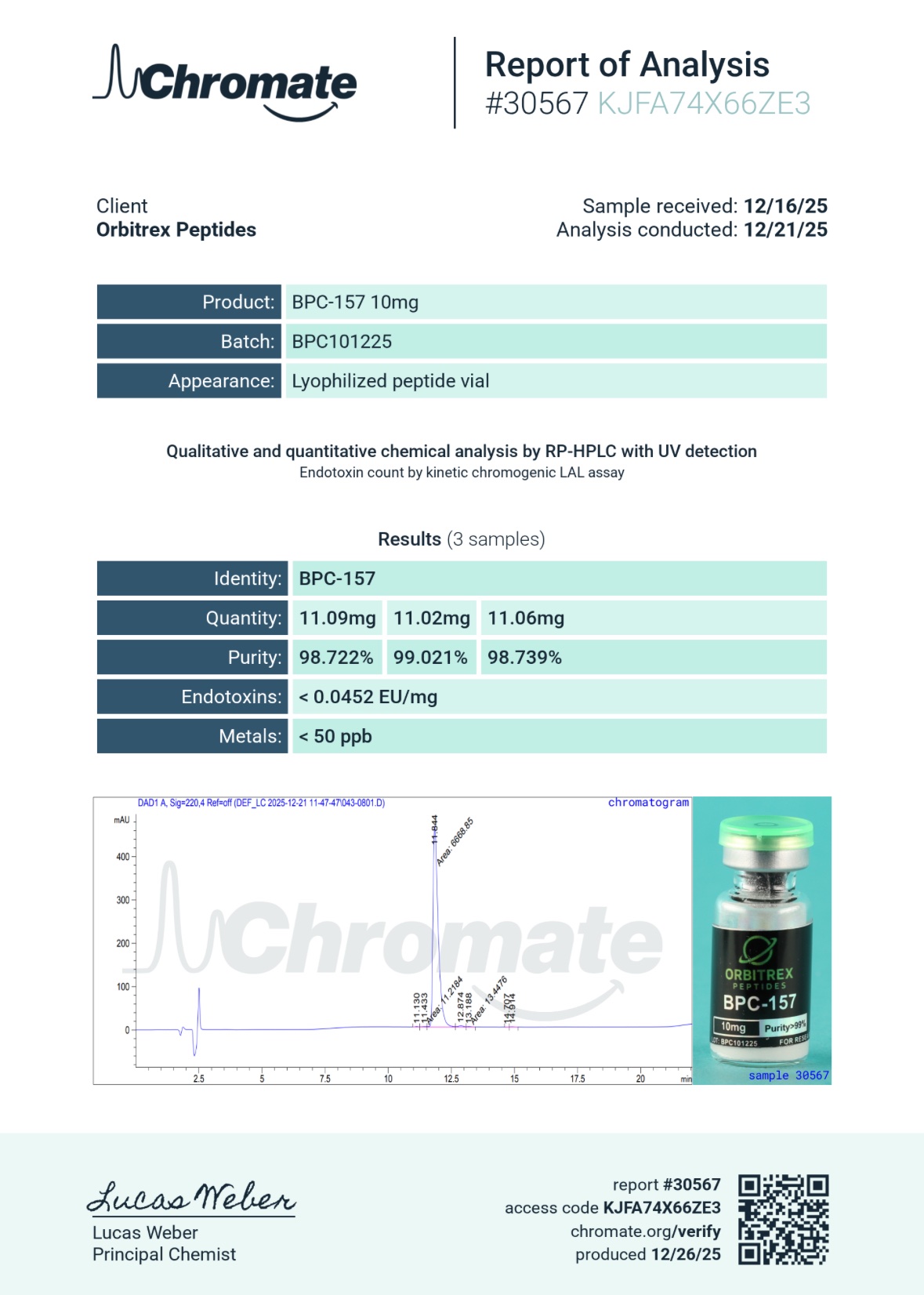
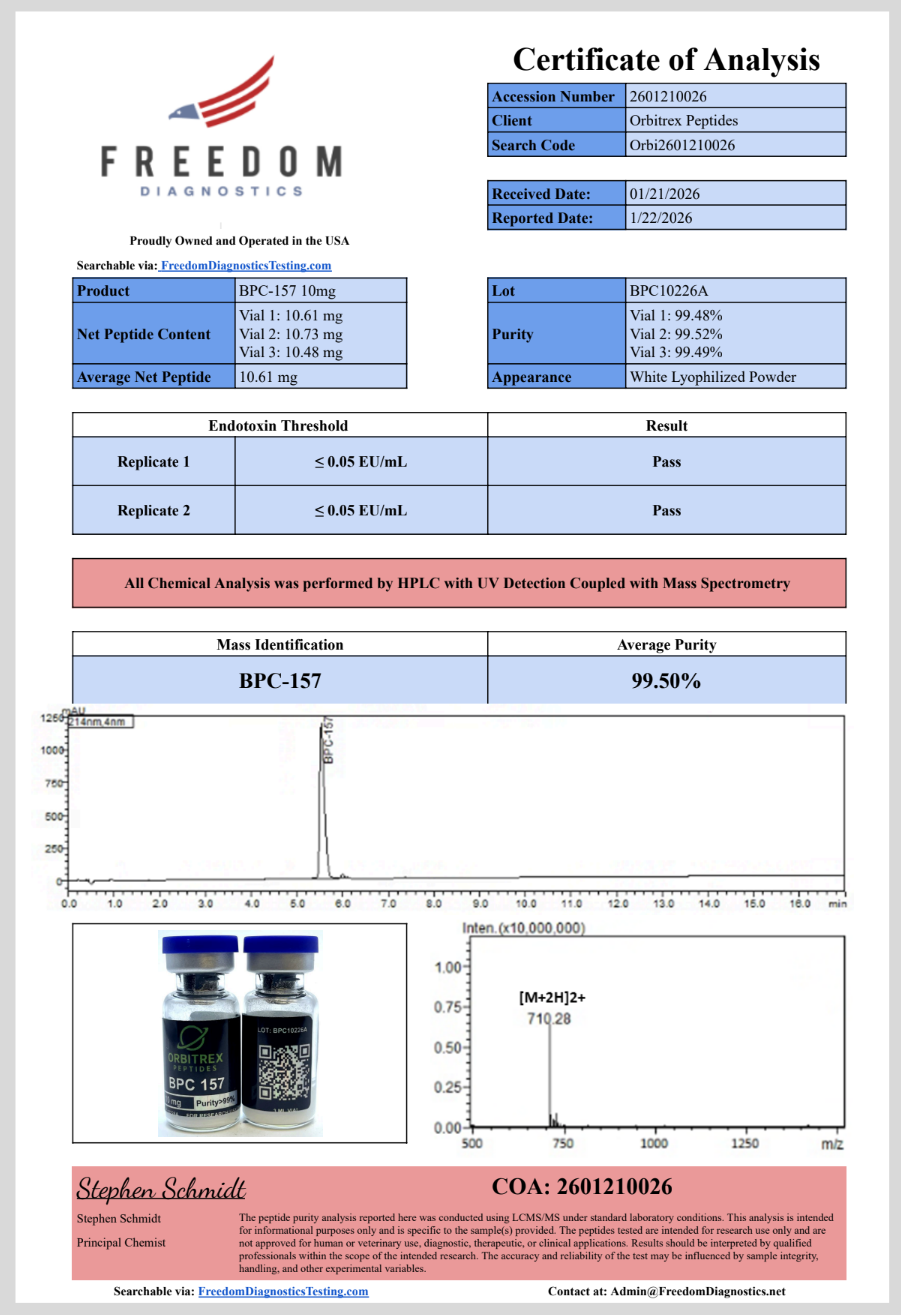
This is precisely why we guarantee that every single batch of our BPC-157 10mg Peptide undergoes the most rigorous, independent third-party testing available before it is ever cleared for distribution to the scientific community.
Our primary testing methodologies include High-Performance Liquid Chromatography (HPLC) and Liquid Chromatography-Mass Spectrometry (LC-MS). The HPLC analysis ensures that the molecular weight and retention time of the powder perfectly match the exact profile of pure BPC-157, successfully separating out any potential contaminants, leftover manufacturing solvents, or truncated peptide fragments.
The Mass Spectrometry confirms the exact 15-amino-acid sequence of the peptide. Manufacturing a pentadecapeptide requires immense biochemical precision; our LC-MS testing guarantees there are no missing, swapped, or malformed links in the molecular structure.
We mandate strictly >99% purity for the BPC-157 10mg Peptide, ensuring your laboratory receives uncompromised materials entirely free from binders, heavy metals, synthetic impurities, or leftover manufacturing byproducts. When you source your complex regenerative materials from Orbitrex, you are sourcing absolute, verifiable reliability.
Preparation and Handling of the BPC-157 10mg Peptide
Due to the highly fragile molecular structure of synthetic amino acid chains, the proper preparation, reconstitution, and storage of the BPC-157 10mg Peptide are absolutely critical to maintaining its analytical efficacy and preventing rapid degradation prior to your planned experiments.
The product is shipped as a lyophilized (freeze-dried) solid powder inside a sterile, vacuum-sealed glass vial. Lyophilization removes the water from the peptide solution under extremely low temperature and pressure, which stabilizes the fragile molecular bonds and allows the BPC-157 10mg Peptide to survive the shipping process without rapid degradation or structural collapse.
Reconstitution Protocols
To prepare the BPC-157 10mg Peptide for in-vitro application, the powder must be carefully reconstituted into a liquid solution. It is highly recommended to use sterile bacteriostatic water (water containing 0.9% benzyl alcohol) or sterile saline, depending entirely on the specific chemical requirements and sensitivities of your specific cell culture.
When introducing the diluent into the vial containing the BPC-157 10mg Peptide, standard sterile laboratory protocols must be strictly observed:
-
Swab the rubber stopper of both the peptide vial and the diluent vial with 70% isopropyl alcohol to ensure complete sterility.
-
Using a sterile syringe, draw the exact desired volume of diluent.
-
Inject the diluent extremely slowly into the peptide vial. Crucial: Direct the stream of the liquid against the inner glass wall of the vial rather than shooting it directly into the lyophilized powder. The force of a direct, high-pressure liquid stream can physically shear the delicate peptide bonds of the BPC-157 10mg Peptide, irreparably damaging the molecules before they are ever utilized in your assays.
-
Do not shake the vial under any circumstances. Vigorous shaking will destroy the amino acid sequences. Gently swirl or roll the vial between your fingers until the powder has completely dissolved into a perfectly clear, uniform solution.
Storage Guidelines for the BPC-157 10mg Peptide
Maintaining the molecular integrity of the BPC-157 10mg Peptide post-reconstitution is paramount to the success, accuracy, and reproducibility of your research.
Unreconstituted (Lyophilized Powder): If you are not utilizing the peptide immediately upon delivery, the dry powder should be stored away from direct sunlight in a completely dry, temperature-controlled environment. For short-term storage (up to 30 days), standard room temperature is acceptable, though refrigeration is always preferred. For long-term storage (up to 24 months), the lyophilized vials must be kept in a dedicated laboratory freezer at -20°C.
Reconstituted (Liquid Solution): Once bacteriostatic water or saline has been introduced to the BPC-157 10mg Peptide, the structural degradation clock begins ticking immediately. The reconstituted vial must be immediately refrigerated at 2°C to 8°C (36°F to 46°F). Even when kept at precise, temperature-controlled refrigerated settings, the mixed solution must be utilized in your laboratory assays within 20 to 30 days. Beyond this tight window, the delicate peptide chains will begin to naturally degrade, losing their biological potency, breaking down into unusable fragments, and inevitably skewing your analytical data.
Disclaimer: All products listed by Orbitrex, including the BPC-157 10mg Peptide, are sold strictly for in-vitro laboratory research and analytical purposes only. They are not intended for human consumption, ingestion, diagnostic, therapeutic, or agricultural use. Our products are not FDA-approved for human use. Any communications implying human use, clinical trials on unapproved human subjects, or bodily injection will result in the immediate cancellation of your account and permanent restriction from our supply chain. All researchers must adhere to their local institutional review board (IRB) guidelines when handling these research materials.