Comprehensive Research Guide to the ARA-290 Peptide: The Science of the Innate Repair Receptor
When exploring the absolute cutting edge of neurology, chronic pain management, and advanced tissue preservation, few biochemical compounds offer the profound, foundational importance of the ARA-290 Peptide (Cibinetide). Representing a massive paradigm shift in how we understand the body’s response to injury, this specific 11-amino-acid peptide is derived from the structure of erythropoietin (EPO). However, it is fundamentally different because it does not stimulate red blood cell production. Instead, it is a highly selective agonist of the Innate Repair Receptor (IRR), acting as a primary biological “rescue signal” that shuts down inflammation and triggers immediate cellular repair.
This comprehensive guide delves deeply into the biochemical science, structural mechanisms, and rigorous laboratory applications of the ARA-290 Peptide, providing scientific professionals, longevity researchers, and dedicated biohackers with the critical data required to fully understand its vast physical potential. Whether your focus is investigating the reversal of small fiber neuropathy, studying the profound impact of macrophage modulation on autoimmune health, or exploring novel pathways for protecting the heart and kidneys from ischemic damage, this specific high-purity formulation offers a highly reliable, heavily documented profile for rigorous scientific observation.
The Science of Selective Repair: Why ARA-290 is a Biological Breakthrough
To fully grasp the massive efficacy of this critical neuroprotective peptide, it is essential to trace the biological role of Erythropoietin (EPO). For decades, EPO was known only for its ability to create new blood cells. However, researchers discovered that in times of extreme stress or injury, cells express a different kind of receptor—the Innate Repair Receptor (IRR). While standard EPO can bind to this receptor, it also continues to thicken the blood, which can be dangerous in high doses.
The massive breakthrough of the ARA-290 Peptide lies in its absolute selectivity. It was engineered to bind only to the IRR, completely bypassing the receptors responsible for blood cell production. By artificially reintroducing this massive, high-purity signaling molecule into a biological system, scientists aim to literally “turn off” the fire of chronic inflammation and “turn on” the body’s internal repair machinery, forcing damaged nerves and tissues to rapidly regenerate without any impact on red blood cell count.
What is the ARA-290 Peptide? The Structural Science Behind the Molecule
At its core, the ARA-290 Peptide is a synthetic 11-amino-acid sequence ($pyroGlu-Glu-Gln-Leu-Glu-Arg-Ala-Leu-Asn-Ser-Ser$) that mirrors a specific loop on the EPO molecule. Its molecular structure is designed for high affinity and stability, ensuring it can effectively navigate the biological environment to reach the IRR.
In terms of functional biology, the ARA-290 Peptide works by binding to the IRR, which is a heteromer composed of the EPO receptor and the beta common receptor (CD131). Research published in high-impact journals like Molecular Medicine details how this peptide is a fundamental tool in neuro-inflammatory research, ensuring that the body can resolve “cytokine storms” at a localized level. In modern research environments, the specific ARA-290 Peptide dosage format is highly preferred because it provides an incredibly precise, clinically significant yield for targeted studies in sarcoidosis-associated pain and diabetic neuropathy.
Pharmacokinetics: Absorption, Distribution, and Nerve Integration
Understanding the complex pharmacokinetic profile of this vital repair peptide is absolutely vital for properly structuring laboratory experiments, determining accurate dosing intervals, and understanding how it achieves its systemic results.
Rapid Onset and Systemic Distribution
The ARA-290 Peptide is characterized by a relatively short half-life in the bloodstream, but its biological effects are long-lasting. When administered via subcutaneous injection in experimental models, the peptide exhibits incredibly rapid systemic absorption. Unlike larger proteins, this 11-amino-acid chain can easily penetrate tissues and localize in areas of high IRR expression—specifically in damaged nerves and inflamed organs. Studies indicate that maximum active concentrations are typically reached within a short window, making it a highly rapid-acting compound for acute injury management.
Targeting Small Fiber Nerves
One of the most remarkable features of the ARA-290 Peptide is its ability to specifically target and protect small fiber nerves. These are the delicate nerves responsible for pain and temperature sensation, which are often the first to be destroyed in chronic diseases. The unique molecular structure allows for a “saturation” of the body’s repair pathways, ensuring that the signals reach the peripheral nervous system where they can begin the process of fiber regrowth. This systemic approach is what allows for the profound, pain-resolving benefits observed in long-term ARA-290 studies.
The Mechanism of Action: How ARA-290 Peptide Interacts with the Body
Understanding how this specific, targeted sequence exerts its profound neuroprotective and anti-inflammatory effects requires a highly detailed dive into cellular biochemistry. Its mechanism of action is distinctly multifaceted, operating seamlessly across several biological systems simultaneously to force the body into an optimized state of repair.
1. Deactivation of Pro-Inflammatory Cytokines
The primary, absolutely critical mechanism observed in pain research is the suppression of the inflammatory cascade. By flooding the system with the ARA-290 Peptide, researchers can trigger a massive reduction in the production of TNF-alpha, IL-6, and other “danger signals.” This leads to a massive, systemic cooling of the inflammatory environment, allowing the body’s natural healing processes to proceed without being constantly attacked by its own immune system.
2. Supercharging Macrophage Polarization
Beyond simple cytokine suppression, this peptide heavily targets the behavior of immune cells. The ARA-290 Peptide has been shown to aggressively shift macrophages from a pro-inflammatory (M1) state to a pro-repair (M2) state. This mechanism provides a massive biological unlock for researchers studying autoimmune conditions and chronic tissue damage, as it transforms the immune system from an “attacker” into a “builder.”
3. Protecting the Blood-Brain Barrier and CNS
The compound successfully targets the body’s central nervous system. By activating the IRR, the ARA-290 Peptide protects delicate neurons from apoptosis (programmed cell death) and stabilizes the blood-brain barrier. This highly nuanced neuro-protective effect is exactly why the peptide is aggressively studied for its massive potential to completely eliminate chronic neurological pain, radically improve cognitive resilience, and aggressively protect the body against severe age-related physical decline.
Primary Research Applications in the Laboratory
The remarkably diverse, absolutely foundational biological activities of this molecule have led to a rapidly expanding array of high-level research applications. The baseline ARA-290 Peptide formulation is particularly useful for exploring the following cutting-edge scientific avenues:
Reversing Small Fiber Neuropathy and Chronic Pain
In the realm of pain science, this sequence is considered the absolute gold standard for studying nerve rejuvenation. Studies frequently focus on its capacity to aggressively stimulate the regrowth of small nerve fibers and reduce the “firing” of pain signals in animal models. Researchers utilize the ARA-290 Peptide to observe how massive biochemical interventions can completely neutralize chronic pain without the use of addictive opioids or central nervous system sedatives.
Advanced Sarcoidosis and Autoimmune Research
Because of its unique, profound ability to supercharge the body’s own repair pathways, it acts as a profoundly powerful autoimmune catalyst. Experimental models show that administering the massive sequence significantly improves quality of life scores in sarcoidosis subjects. Researchers deeply use the ARA-290 Peptide molecule to map how the literal biological mechanics of the immune system can be actively “re-tuned” to stop attacking the body’s own tissues.
Ischemic Protection and Organ Preservation
Physical performance and longevity are deeply tied to the body’s ability to survive low-oxygen states. Studies involving the ARA-290 Peptide have deeply explored its unique ability to rapidly “reboot” compromised organ health, particularly in the heart and kidneys after a stroke or heart attack. By massively protecting the cells from the stress of ischemia, it is continuously investigated as a critical, highly successful tool for violently accelerating recovery and physically repairing the micro-damage caused by years of chronic inflammation.
The Importance of High-Purity Synthesis in Laboratory Settings
In any rigorous, peer-reviewed scientific study or biohacking protocol, the sheer absolute quality of the primary compound directly dictates the absolute validity of the final results. Utilizing an ultra-high-purity ARA-290 Peptide synthesis is entirely non-negotiable for serious clinical researchers and dedicated longevity optimizers.
Impurities in standard peptide manufacturing can heavily include unreacted amino acids or chemical byproducts left over from the synthesis process. If a laboratory or individual inadvertently utilizes a compromised, low-grade batch of the ARA-290 Peptide, these invisible impurities can trigger massive, uncontrolled immune responses or heavily skew quantitative repair data, rendering months of incredibly expensive anti-aging research completely invalid.
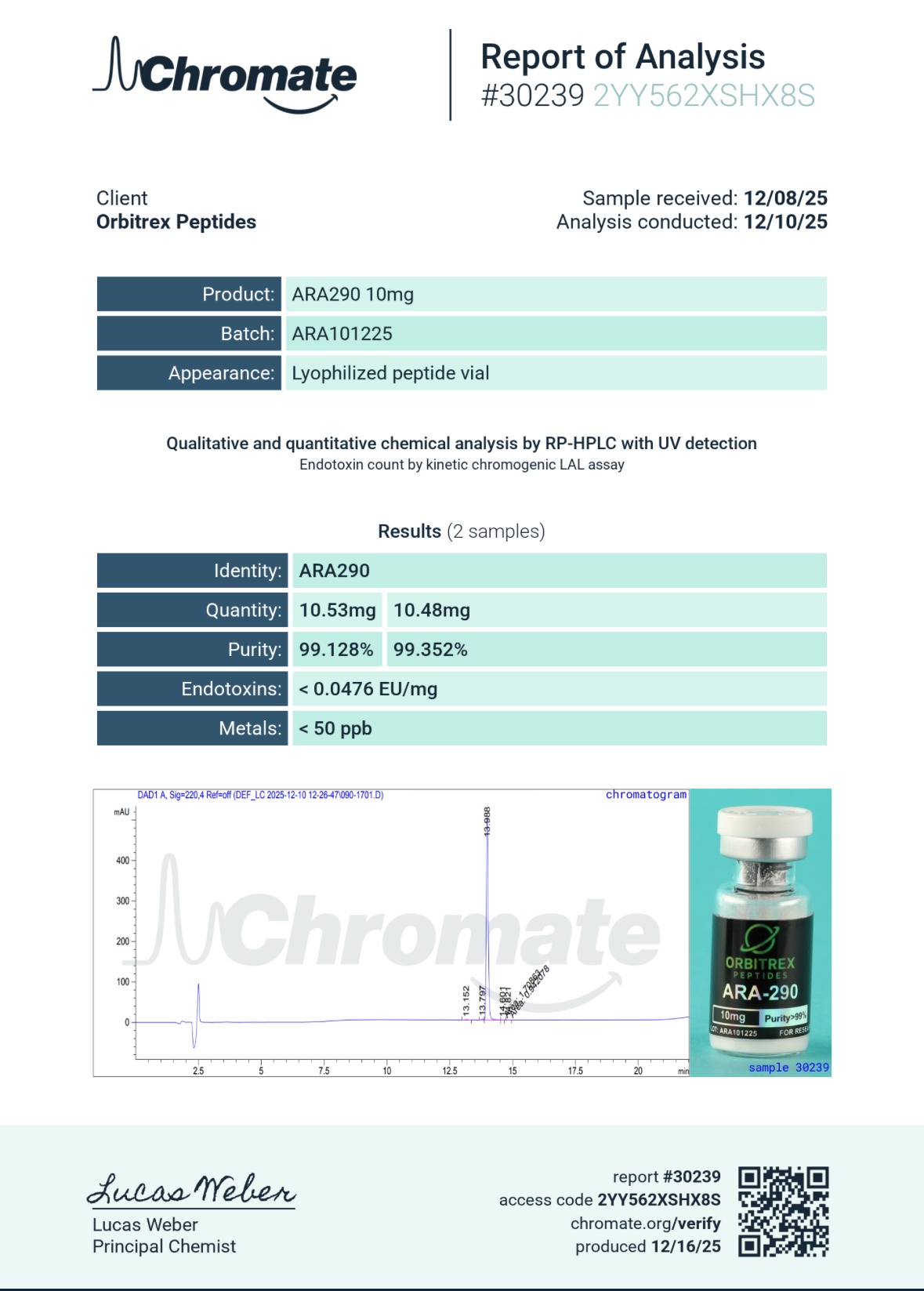
High-grade research compounds must ideally boast an absolute purity of strictly >99%, independently verified by third-party High-Performance Liquid Chromatography (HPLC) and Mass Spectrometry (MS). This rigorous, massive analytical testing guarantees that the biological activity observed during testing is directly, undeniably attributable to the pure, unadulterated sequence and absolutely nothing else.
Preparation, Reconstitution, and Storage Protocols
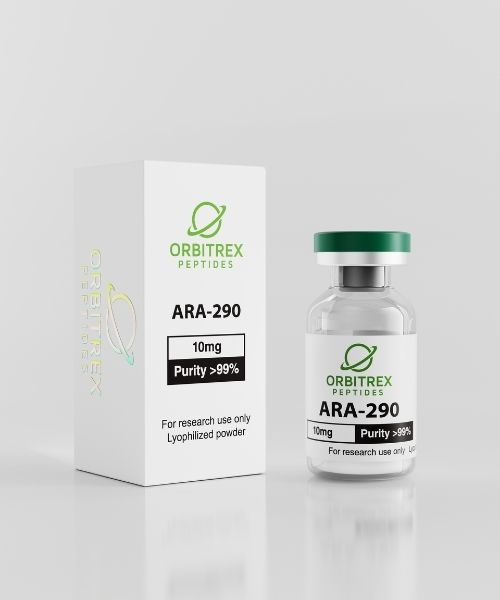
Meticulous, proper handling is profoundly, absolutely critical to maintaining the delicate molecular stability of this 11-amino-acid peptide. Because the product is securely delivered as a stable, highly sensitive lyophilized powder, researchers must strictly follow clinically sterile protocols for reconstitution and long-term storage.
Standard Reconstitution Protocol
To adequately prepare the highly potent ARA-290 Peptide vial for clinical application, it must be carefully reconstituted using a sterile solvent, almost universally bacteriostatic water or sterile saline.
-
Allow the sealed vial to organically reach room temperature before opening to completely prevent massive condensation from forming inside the glass.
-
Swab the protective rubber stopper vigorously with a 70% isopropyl alcohol wipe to ensure a completely sterile injection site.
-
Carefully inject the calculated volume of bacteriostatic water, specifically aiming the liquid stream against the inner glass wall.
-
Allow the powder puck to dissolve gently and naturally. Do not shake the vial vigorously; instead, roll the glass gently between your fingers until the complex solution is completely clear and beautifully transparent.
Long-Term Storage Guidelines
-
Lyophilized Powder: Before liquid reconstitution, the stable freeze-dried solid can be safely stored at room temperature for several weeks without any significant degradation. For extensive long-term storage (spanning several months to years), ARA-290 Peptide vials should be strictly kept in a dark laboratory freezer at -20°C to massively preserve indefinite structural integrity.
-
Reconstituted Solution: Once successfully mixed with bacteriostatic water, the molecular structure becomes highly susceptible to rapid degradation from ambient heat and direct UV light exposure. The active liquid solution must be kept consistently refrigerated at 2°C to 8°C (36°F to 46°F) and should generally be completely utilized within 14 to 21 days to ensure maximum biological efficacy and complete, absolute sterility.
Frequently Asked Questions About Cibinetide Research
How does this differ from standard Erythropoietin (EPO)?
The highly potent ARA-290 Peptide provides an unparalleled, clinical-grade baseline for tissue repair that standard EPO cannot match without side effects. While EPO stimulates red blood cell production (erythropoiesis), which can lead to dangerously thick blood, ARA-290 is “non-erythropoietic.” It works specifically on the repair pathways of the IRR, ensuring that the body gets all of the healing benefits of EPO without the cardiovascular risks.
Is the peptide structurally stable during standard international transit?
Yes, in its lyophilized, freeze-dried form, the molecule is remarkably chemically robust. The advanced freeze-drying process completely removes the moisture that traditionally facilitates rapid molecular degradation. While it is always best practice to immediately store the ARA-290 Peptide in a cool, absolutely dark environment upon arrival, standard transit times at ambient temperatures do not heavily compromise the strict integrity of the powder.
Can it be used in conjunction with other research peptides?
In highly advanced study protocols, the ARA-290 Peptide is frequently and massively successfully researched alongside other tissue-healing or anti-inflammatory compounds, such as BPC-157 (for massive systemic healing synergy) or GHK-Cu (for absolute tissue remodeling). Researchers closely monitor these specific, complex combinations to document massive potential synergistic effects on the nervous system and broader, absolute biological optimization pathways.
Conclusion: The Absolute Future of Neuroprotective Science
The ongoing, massive global exploration of Innate Repair Receptor agonists represents the absolute cutting edge of modern biology and severe pain medicine, and the ARA-290 Peptide remains at the very forefront of this massive biochemical scientific revolution. From its profound, heavily documented ability to perfectly regulate gene expression through the IRR to its incredible neuroprotective and anti-inflammatory capabilities, it offers clinical researchers a highly reliable, incredibly potent, and endlessly fascinating compound for biochemical study.
By ensuring your laboratory sources an ultra-high-purity product and adheres strictly to rigorous, sterile handling protocols, you can confidently explore the vast, absolutely untapped potential of this remarkable sequence. As advanced neurology and chronic pain research methodologies violently evolve and biological mapping technology improves, the massive empirical data generated from ARA-290 Peptide studies will undoubtedly continue to heavily unlock profound new understandings of nerve remodeling, absolute cellular defense, and ultimate human longevity.
(Disclaimer: All information provided regarding this product is strictly for educational and informational purposes. This product is sold exclusively for laboratory and research use. It is not intended for human consumption, diagnosis, treatment, or cure of any disease or condition.)